

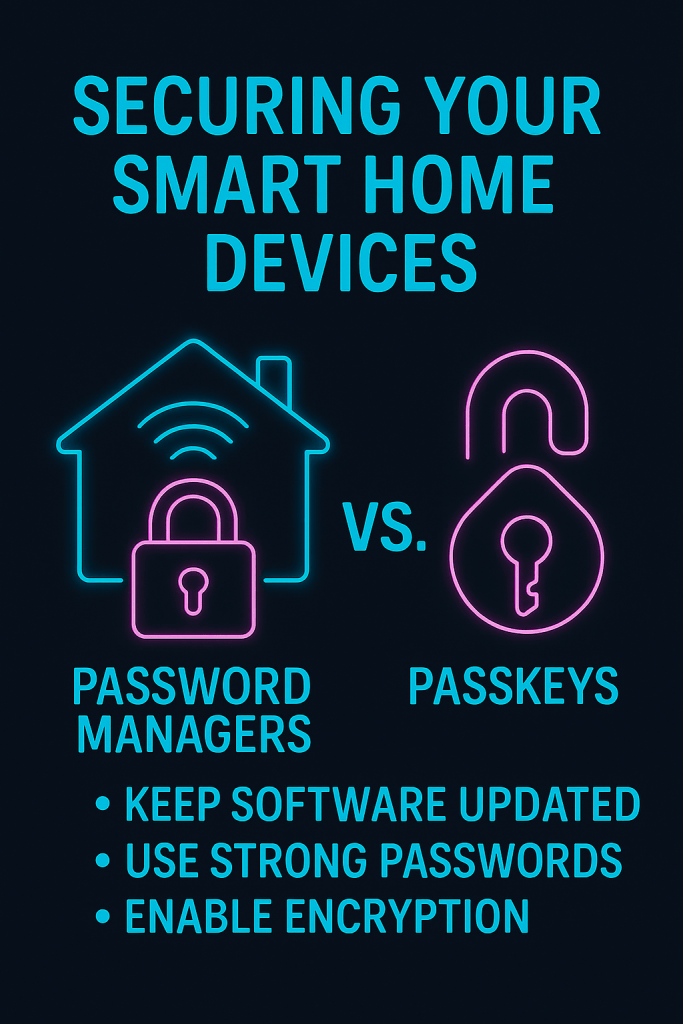
Securing Your Smart Home Devices
Smart homes are no longer futuristic—they’re here. From voice assistants and smart TVs to connected locks and thermostats, our homes are filled with devices that make life easier. But convenience comes with risk: every connected gadget is a potential entry point for cybercriminals. Securing your smart home is essential to protect your privacy, finances, and peace of mind.
🔐 Why Smart Homes Are Vulnerable
- Multiple devices: Each device adds another attack surface.
- Weak default settings: Many gadgets ship with insecure default passwords.
- Data collection: Smart devices often gather personal information.
- IoT botnets: Hackers can hijack devices to launch large-scale attacks.
🛡️ Everyday Strategies to Secure Your Smart Home
1. Change Default Passwords
Never keep the factory-set password. Use strong, unique credentials for each device.
2. Enable Automatic Updates
Firmware updates patch vulnerabilities. Make sure your devices update automatically or check regularly.
3. Secure Your Wi-Fi Network
- Use WPA3 encryption if available.
- Change your router’s default login credentials.
- Create a separate network for smart devices to isolate them from personal computers.
4. Limit Device Permissions
Review what data your devices collect and disable unnecessary features. For example, turn off microphones or cameras when not needed.
5. Use Multi-Factor Authentication (MFA)
If your smart home apps support MFA, enable it. This adds a layer of protection against stolen passwords.
6. Monitor Device Activity
Check logs or app dashboards for unusual activity. Unexpected connections could signal compromise.
7. Invest in a Smart Security Hub
Some hubs offer centralized monitoring and security features, making it easier to manage multiple devices.
8. Disconnect What You Don’t Use
Unused devices should be powered down or disconnected from the network.
🌐 The Bigger Picture
Smart home security isn’t just about protecting gadgets—it’s about safeguarding your lifestyle. A hacked smart lock or compromised camera can have real-world consequences. By practicing good cyber hygiene and staying proactive, you can enjoy the benefits of a connected home without sacrificing safety.
Final Thoughts
Securing your smart home devices doesn’t require advanced technical skills—it’s about consistent habits. Change default settings, keep devices updated, secure your Wi-Fi, and stay alert. With these steps, your smart home can remain both convenient and safe.


