

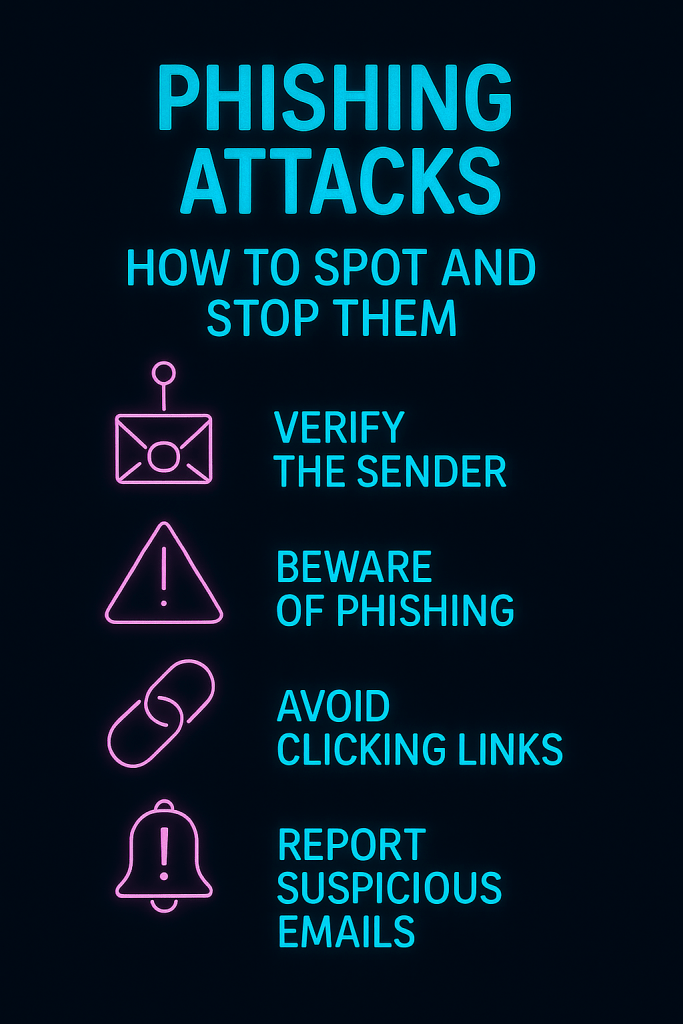
Phishing Attacks: How to Spot and Stop Them
Phishing remains one of the most common—and successful—forms of cybercrime. Unlike complex hacking techniques, phishing exploits human behavior: trust, fear, curiosity, or urgency. Every day, thousands of phishing attempts are launched worldwide, targeting individuals and businesses alike. The good news? With awareness and proactive habits, you can spot and stop these attacks before they succeed.
🎯 What is Phishing?
Phishing is a fraudulent attempt to trick you into revealing sensitive information—like passwords, bank details, or personal data—by pretending to be a trusted source. Attackers often use:
- Emails that mimic banks, employers, or government agencies.
- Text messages (smishing) with urgent payment or delivery notices.
- Phone calls (vishing) impersonating customer support.
- Fake websites designed to look identical to legitimate ones.
🚩 How to Spot Phishing Attempts
- Suspicious Sender Addresses
- Look closely at the sender’s email. A slight misspelling (e.g., “paypa1.com” instead of “paypal.com”) is a red flag.
- Urgency or Fear Tactics
- “Your account will be suspended in 24 hours!” Phishers rely on panic to push quick action.
- Unexpected Attachments or Links
- Hover over links before clicking. If the URL doesn’t match the supposed sender, don’t engage.
- Generic Greetings
- “Dear Customer” instead of your actual name often signals a mass phishing attempt.
- Too Good to Be True Offers
- Free prizes, lottery wins, or sudden refunds are classic bait.
🛡️ How to Stop Phishing Attacks
- Enable Multi-Factor Authentication (MFA)
- Even if your password is stolen, MFA adds a protective barrier.
- Use Security Software
- Antivirus and anti-phishing filters can block malicious emails and websites.
- Educate Yourself and Your Team
- Regular training helps employees recognize phishing attempts before they click.
- Verify Requests Directly
- If you receive a suspicious email from your bank or employer, call them directly using official contact details.
- Report Phishing
- Forward phishing emails to your IT department or report them to national cybersecurity authorities.
📝 What to Do If You Fall Victim
- Change your passwords immediately.
- Notify your bank or credit card provider.
- Run a full device scan for malware.
- Monitor accounts for unusual activity.
Final Thoughts
Phishing thrives because it targets human psychology, not just technology. By staying alert, questioning suspicious messages, and building strong cyber hygiene habits, you can drastically reduce your risk. Remember: Think before you click.

 CYBERHELP AFRICA