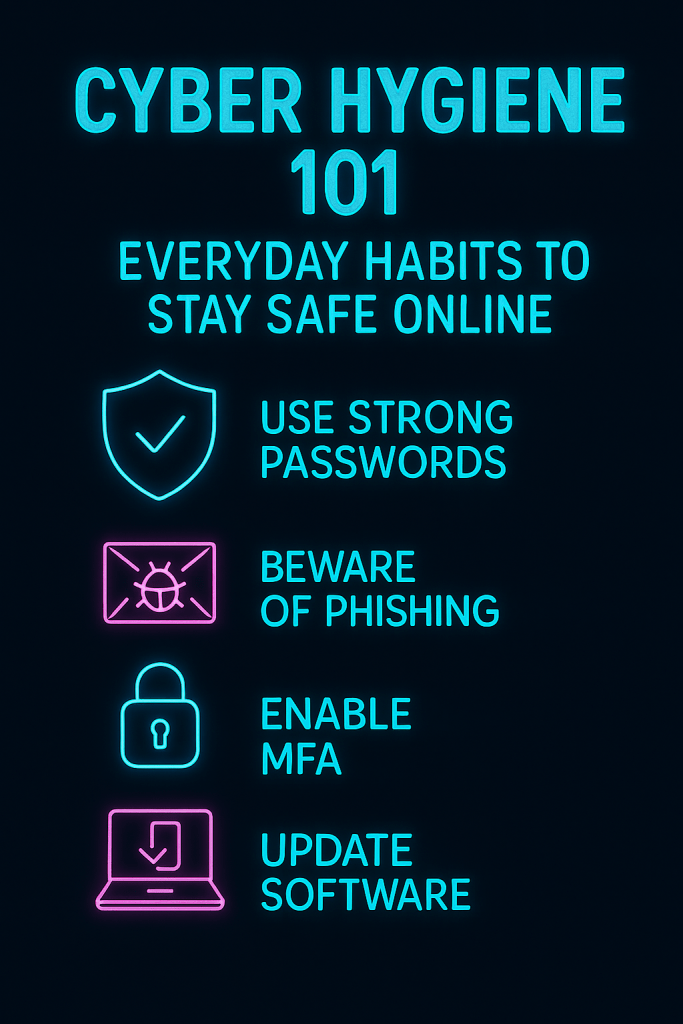
Cyber Hygiene 101: Everyday Habits to Stay Safe Online
In today’s hyperconnected world, practicing good cyber hygiene is as essential as brushing your teeth or washing your hands. Just as personal hygiene protects your health, cyber hygiene safeguards your digital life from hackers, scams, and data breaches. The good news? Staying safe online doesn’t require expensive tools—it’s about consistent everyday habits.
1. Keep Software Updated
Outdated software is like leaving your front door unlocked. Updates patch vulnerabilities that attackers exploit. Enable automatic updates on your devices, apps, and even smart home gadgets to stay protected.
2. Use Strong, Unique Passwords
Weak or reused passwords are a hacker’s dream. Use long, complex passwords and avoid recycling them across accounts. A password manager can help you generate and store them securely.
3. Enable Multi-Factor Authentication (MFA)
MFA adds an extra layer of security by requiring a second step—like a code sent to your phone—before granting access. Even if your password is stolen, MFA can block unauthorized entry.
4. Be Wary of Phishing Attempts
Phishing emails and fake websites are designed to trick you into revealing personal information. Always double-check sender addresses, avoid clicking suspicious links, and verify requests before responding.
5. Secure Your Wi-Fi
Change default router passwords, use WPA3 encryption if available, and avoid public Wi-Fi for sensitive transactions. A VPN can add extra protection when you’re on the go.
6. Backup Your Data Regularly
Ransomware and accidental deletions can wipe out valuable files. Keep backups on external drives or secure cloud storage so you can recover quickly if disaster strikes.
7. Limit Personal Information Sharing
Think twice before posting personal details online. Cybercriminals use social media to gather information for identity theft or targeted scams.
8. Practice Safe Browsing
Stick to trusted websites, look for HTTPS encryption, and avoid downloading files from unknown sources. Browser security extensions can help block malicious sites.
9. Monitor Your Accounts
Regularly review bank statements, credit reports, and online accounts for suspicious activity. Early detection can prevent small issues from becoming major breaches.
10. Build a Security Mindset
Cyber hygiene isn’t a one-time checklist—it’s a lifestyle. Stay curious, keep learning, and treat online safety as part of your daily routine.
Final Thoughts
Cyber hygiene is about forming habits that protect your digital presence. By updating software, using strong passwords, enabling MFA, and staying alert, you can drastically reduce your risk of cyberattacks. Remember: online safety starts with everyday choices.

 CYBERHELP AFRICA