

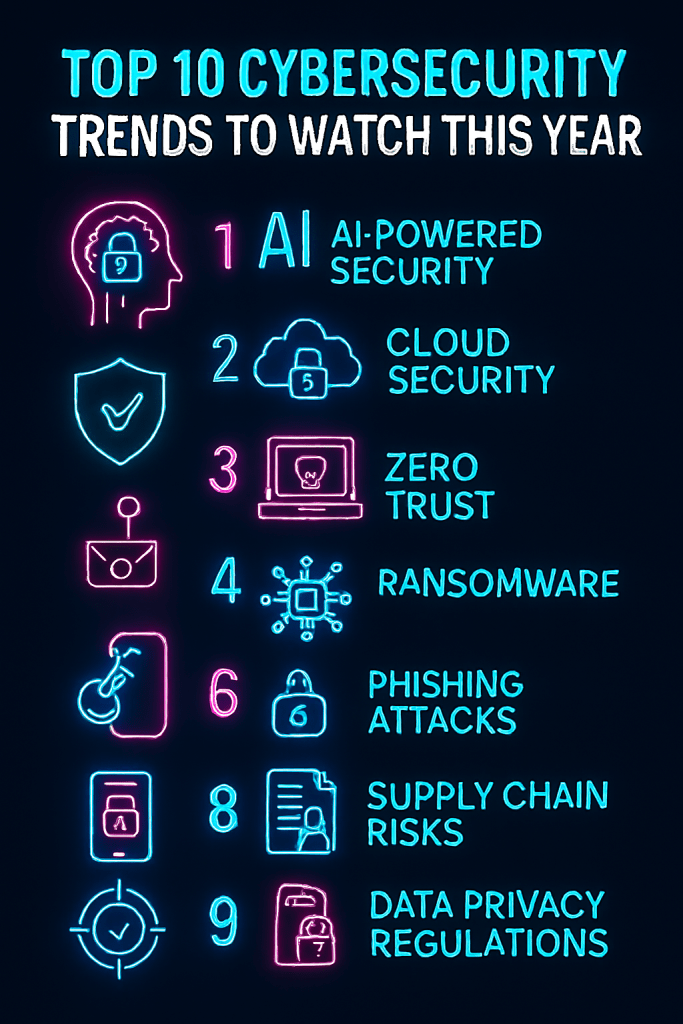
Top 10 Cybersecurity Trends to Watch This Year
Cybersecurity in 2026 is no longer just about protecting data—it’s about safeguarding trust, resilience, and innovation in a world where digital systems underpin every aspect of life. From AI-driven threats to quantum computing risks, the landscape is evolving faster than ever. Here are the top 10 trends shaping cybersecurity this year.
1. AI-Powered Threats and Defenses
Artificial intelligence is both a weapon and a shield. Cybercriminals are using AI to automate phishing, deepfake attacks, and malware creation, while defenders deploy AI for anomaly detection and predictive threat intelligence. The race between offensive and defensive AI is intensifying.
2. Quantum Computing and Post-Quantum Security
Quantum computing poses a looming threat to traditional encryption. Organizations are beginning the transition to post-quantum cryptography (PQC) to protect sensitive data against “harvest now, decrypt later” attacks.
3. Zero Trust Everywhere
Zero Trust is no longer optional—it’s expanding across cloud-native apps, IoT devices, and hybrid work environments. Continuous verification of users, devices, and applications is becoming the default security posture.
4. Regulatory Volatility and Privacy Laws
Global privacy regulations are tightening, with new frameworks emerging in the EU, US, Africa, and Asia. Compliance is now a growth enabler, not just a legal checkbox.
5. Geopolitical Cyber Risks
Cyber warfare and state-sponsored attacks are escalating, targeting critical infrastructure and supply chains. Cybersecurity has become a matter of national security.
6. Cloud and Multi-Cloud Security Challenges
As businesses adopt multi-cloud strategies, misconfigurations and weak integrations remain major risks. Cloud-native security tools and shared responsibility models are essential.
7. Ransomware Evolution
Ransomware is shifting from encryption-only attacks to data exfiltration and extortion. Healthcare, telecoms, and education sectors are especially vulnerable.
8. AI Governance and Accountability
While AI adoption is widespread, governance frameworks lag behind. 2026 is a turning point for AI accountability, with organizations pressured to implement ethical and secure AI practices.
9. Cyber Equity Gap
The World Economic Forum warns of unequal access to cybersecurity resources between nations and organizations. This gap increases systemic risk globally, demanding international cooperation.
10. Human-Centric Security Awareness
Despite automation, human error remains the leading cause of breaches. Building a strong security culture through continuous training and awareness programs is critical.
Final Thoughts
Cybersecurity in 2026 is defined by complexity, speed, and interconnected risks. Organizations that thrive will be those that embrace resilience, proactive defense, and global cooperation. Whether you’re a startup or a multinational, these trends demand attention now.

 CYBERHELP AFRICA