Data Privacy vs. Cybersecurity: Teammates, Not the Same Team
In the digital world, “data privacy” and “cybersecurity” are often used interchangeably. When a major company announces a data breach, headlines scream about privacy violations, and the public rightly fears their personal information is exposed. This conflation is understandable, but it obscures a critical truth.
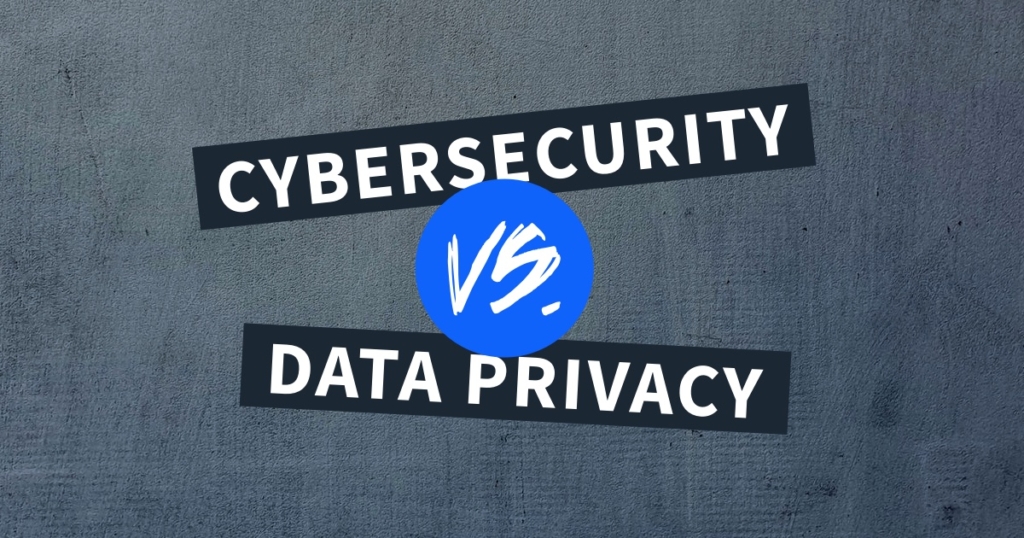
While deeply intertwined, data privacy and cybersecurity are distinct disciplines. Understanding where they overlap—and more importantly, where they clash—is essential for building a robust and compliant digital defense strategy.
Let’s break down this crucial relationship.
The Core Definitions: Two Different Goals
First, let’s establish what we’re really talking about.
Cybersecurity is the bodyguard. Its primary goal is to protect systems, networks, and data from unauthorized access, theft, or damage. It’s about building walls (firewalls), setting alarms (intrusion detection), and controlling who gets through the gate (access controls). Cybersecurity asks: “Can we keep the bad guys out?”
- Focus: Protection, Integrity, Availability.
- Key Concerns: Hacking, malware, ransomware, DDoS attacks.
- Analogy: The security system for a bank vault.
Data Privacy is the rulebook. Its primary goal is to ensure that personal data is collected, used, stored, and shared in a lawful, fair, and transparent manner. It’s about governance, policies, and individual rights. Privacy asks: “Should we be collecting and using this data in the first place, and do we have permission?”
- Focus: Consent, Lawful Use, Individual Rights, Transparency.
- Key Concerns: GDPR, CCPA, user consent, data minimization, right to be forgotten.
- Analogy: The laws and regulations governing what can be stored in the vault and who can access it, with the customer’s explicit permission.
You can have strong cybersecurity but poor data privacy. Imagine a company with an impenetrable fortress (great cybersecurity) that is secretly selling its customers’ personal data without their consent (terrible data privacy). Conversely, you can have excellent data privacy policies but weak cybersecurity, leaving that well-intentioned data vulnerable to theft.
Where They Overlap: The Sweet Spot of Digital Trust
This is where the magic happens. Data privacy and cybersecurity are two sides of the same coin when it comes to building digital trust. Their collaboration is non-negotiable.
- Data Protection as the Foundation: Strong cybersecurity is the primary enabler of data privacy. You cannot hope to fulfill your privacy promises (like keeping data confidential) without a secure technical infrastructure. Encryption, access controls, and secure data storage are technical measures that directly support legal and ethical privacy obligations.
- Incident Response: When a breach occurs, both teams spring into action. The cybersecurity team works to contain the threat and patch the vulnerability. The privacy team handles legal obligations—notifying regulators, informing affected individuals, and managing the fallout in accordance with laws like GDPR, which mandates notification within 72 hours.
- Risk Management: Both disciplines are fundamentally about managing risk. A unified risk assessment will consider both the technical vulnerability of a system (cybersecurity risk) and the potential impact of a data breach on individuals’ rights and freedoms (privacy risk).
Where They Clash: The Inevitable Tension
Despite their shared goals, the priorities of cybersecurity and data privacy can sometimes conflict. Recognizing these friction points is key to resolving them.
- Data Collection: Minimization vs. Forensics
- Privacy View: Collect only the data you absolutely need for a specific purpose (the principle of “data minimization”). Less data collected means less risk and liability.
- Security View: Collect as much log data as possible for threat hunting, forensic analysis, and incident investigation. More data can help identify the who, what, when, and how of an attack.
- The Clash: The security team wants extensive logging, which may include personal user data. The privacy team sees this as an unnecessary risk and potential violation of minimization principles.
- Access Controls: Convenience vs. Principle of Least Privilege
- Privacy View: Implement “need-to-know” access. Employees should only access personal data essential to their job function.
- Security View: Sometimes, broad access is needed for system administrators or security analysts to troubleshoot and monitor for threats effectively.
- The Clash: Locking down data too tightly can hinder security investigations, while granting overly broad access increases the risk of internal privacy violations.
- User Monitoring: Security vs. Employee Privacy
- Security View: Monitoring user activity (keystrokes, website visits, emails) is a crucial tool for detecting insider threats and malicious activity.
- Privacy View: Extensive employee monitoring can be overly invasive, erode trust, and may violate labor laws and privacy regulations unless it is transparent, proportionate, and has a legal basis.
- The Clash: Balancing the organization’s right to protect itself with the individual’s right to privacy in the workplace.
Bridging the Gap: A Unified Strategy for the Modern Enterprise
To navigate this complex landscape, organizations must foster collaboration.
- Integrated Teams: Don’t let your privacy officers and CISO operate in silos. They should have a seat at the same table from the beginning of any project involving personal data.
- Privacy by Design: Bake both privacy and security principles into the design of your products and processes from the outset, rather than bolting them on as an afterthought.
- Clear Data Governance: Establish a clear framework for data classification, retention, and deletion. This provides a common set of rules for both teams to follow.
- Transparent Communication: Work together to create policies that are both secure and respectful of privacy. For example, implement anonymized logging where possible to satisfy security’s need for data while upholding privacy’s minimization principle.
The Bottom Line
Think of it this way: Cybersecurity protects the data from outsiders (and insiders), while Data Privacy protects the people behind the data.
They are not the same, but they are inseparable partners. In today’s regulatory environment, you cannot have one without the other. By understanding their distinct roles, celebrating their overlaps, and proactively managing their clashes, you can build a framework that doesn’t just secure your data, but also earns the trust of the people who entrusted it to you in the first place.
POWERED BY CYBERGUARD ZW

 CYBERHELP AFRICA